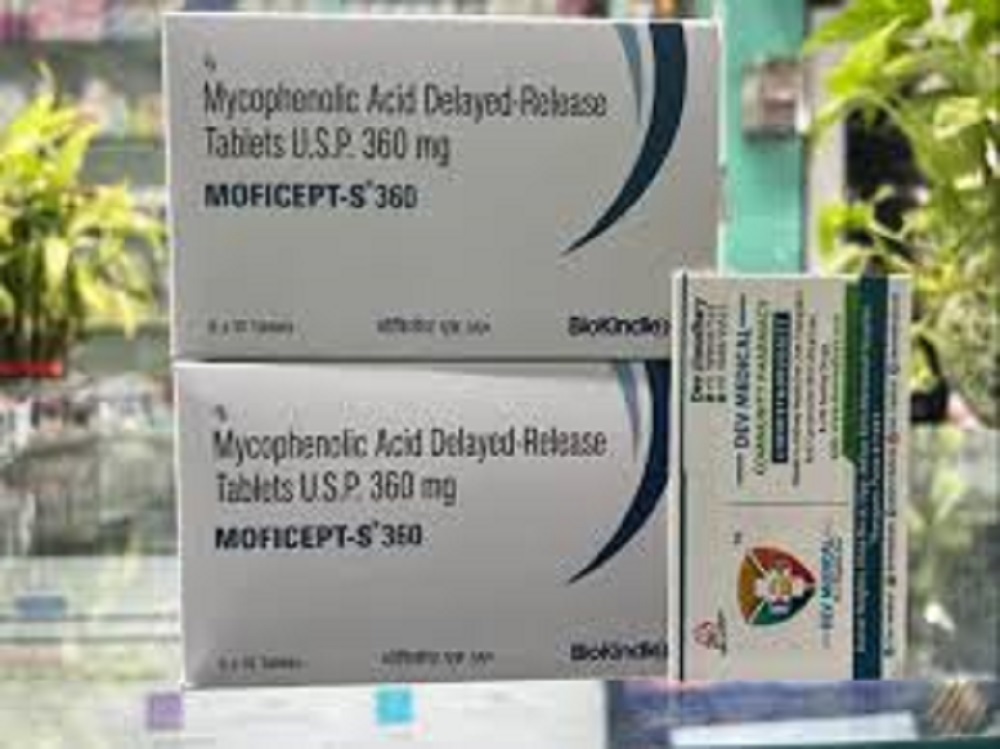
Product Description
Product introduction
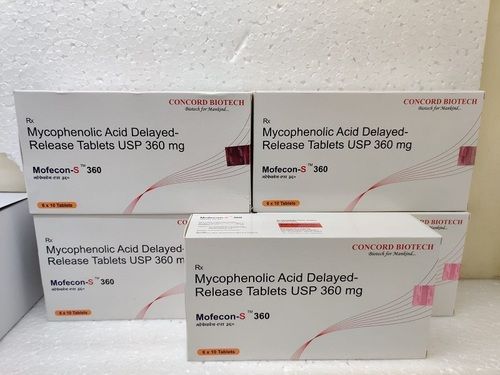
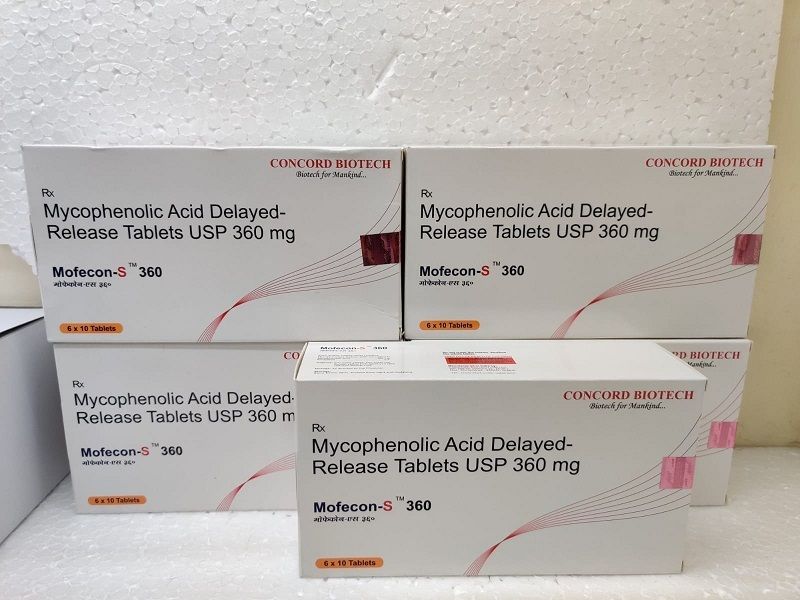
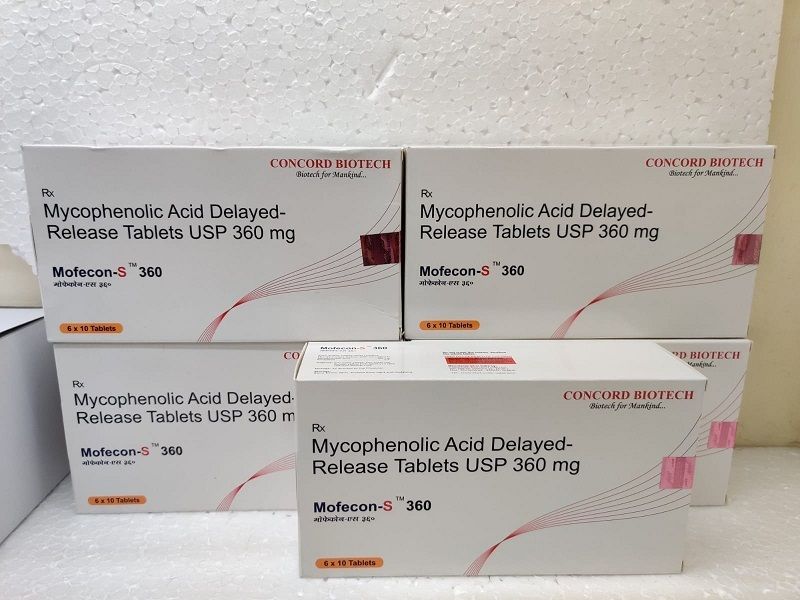
Mofecon-S 360 Tablet DR belongs to a group of medicines called immunosuppressants. It is used with other medicines to prevent your body from rejecting an organ (such as a kidney, heart, or liver) after a transplant. It works by weakening your bodyis immune system, so it does not attack the transplanted organ.
The amount of Mofecon-S 360 Tablet DR you take depends on the type of transplant you have. Follow your doctoris instructions on this. This medicine may be taken with our without food. Swallow it as a whole, do not crush, chew, break, or open them. Take the medicine regularly to get the most benefit and keep taking it even if you feel well. If you stop taking it, you may increase the chances of rejecting your transplanted organ. The treatment will continue for as long as you need it to prevent rejection.
The most common side effects of Mofecon-S 360 Tablet DR are nausea, vomiting, diarrhea, stomach pain, headache, high blood pressure, and changes in the number of white blood cells. Because it suppresses your immune system, you may catch more infections than usual. There is also an increased risk of developing some cancers for this reason. There is a long list of potential side effects. You should ask your doctor about them and what signs to look out for because some can be serious and need urgent medical attention.
This medicine can cause birth defects and miscarriages so do not take it if you are pregnant, planning to become pregnant, or breastfeeding. You should talk to your doctor before taking this medicine if you have any signs of infection, if you have any unexpected bruising or bleeding and if you have ever had a problem with your digestive system. Your doctor also needs to know what other medicines you are taking as there are many which interact with this medicine and affect the way it works. You will have regular tests to check for any changes in the number of your blood cells, inform your doctor if you notice unexplained bruising or bleeding, sore throat, mouth ulcers, or fever.
Uses of Mofecon-S Tablet DR
Benefits of Mofecon-S Tablet DR
In Prevention of organ rejection in transplant patients
Mofecon-S 360 Tablet DR belongs to a group of medicines known as immunosuppressive agents. It lowers your immune response and reduces the chance of your body attacking the transplanted organ. Organ rejection happens when your immune system treats the new organ as an invader and attacks it. This medicine may be used in combination with other medicines to suppress the immune system and help your body accept the new organ.
Efficient Organ Rejection PreventionMycophenolic Acid Tablets serve as a cornerstone in preventing rejection of transplanted organs such as kidneys, hearts, and livers. Through a carefully controlled immunosuppressive mechanism, these tablets help ensure that the body does not mount an immune response against the new organ, thereby promoting longer-term transplant success and patient well-being.
Patient Safety and Usage GuidelinesTo maximize benefits and minimize risks, Mycophenolic Acid Tablets must be taken exactly as prescribed. Patients should swallow the tablets whole with water and may take them with or without food. Due to potential risks such as increased susceptibility to infection and certain side effects, it is essential to monitor for symptoms and maintain routine follow-up with healthcare professionals.
FAQ's of Mycophenolic Acid Tablets:
Q: How should Mycophenolic Acid Tablets be taken for optimal effectiveness?
A: These tablets should be swallowed whole with water, either with or without food, as directed by your physician. Always follow your physician's specific dosage guidelines for best results.
Q: What are the main benefits of using Mycophenolic Acid Tablets after organ transplantation?
A: The primary benefit is the prevention of transplanted organ rejection by suppressing the immune system, which helps prolong the function and survival of the transplanted organ.
Q: When is the use of Mycophenolic Acid Tablets contraindicated?
A: Use is contraindicated during pregnancy, in individuals with known hypersensitivity to mycophenolic acid, and should not be used without physician guidance in pediatric patients.
Q: What are the common side effects associated with Mycophenolic Acid Tablets?
A: Possible side effects include nausea, vomiting, diarrhea, and an increased risk of infections. Notify your physician if you experience any severe or persistent symptoms.
Q: Where should these tablets be stored to maintain their quality?
A: Store Mycophenolic Acid Tablets below 25C, away from moisture and direct light, and keep them in the original packaging until use.
Q: What processes are involved in starting Mycophenolic Acid Tablets for transplant patients?
A: Your doctor will prescribe an appropriate dose after assessing your medical status post-transplant. Routine laboratory monitoring and regular physician assessments will accompany the initiation and ongoing use of therapy.
Q: Is a prescription necessary to obtain Mycophenolic Acid Tablets in India?
A: Yes, Mycophenolic Acid Tablets are prescription-only medicines and should be used strictly under medical supervision.